Preface: I Once Worked in Netscape’s Building
My interest in the dotcom era began with an accidental discovery. From 2017 to 2018, I worked at my first company, Veritas Technologies LLC. One evening, bored at home, I put on a documentary about the dotcom years. It covered the browser war between Netscape and Internet Explorer and how that struggle ended. Near the end, there was a shot of Netscape’s office building. I suddenly recognized it: wasn’t that the building I walked into every day for work?
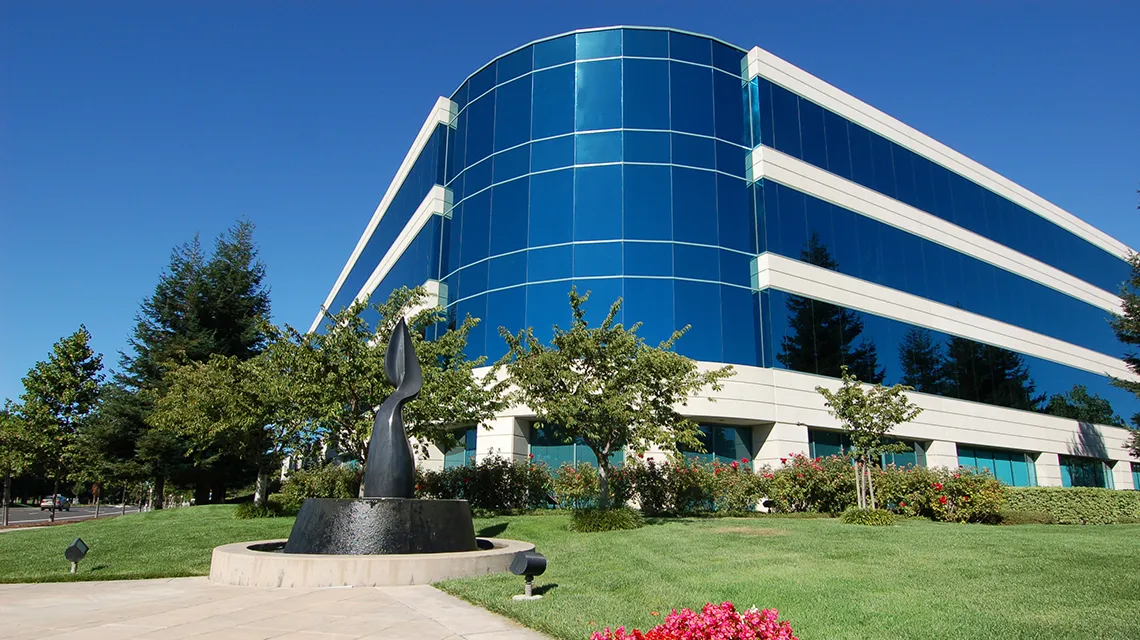
Developer’s photograph of the 500 E. Middlefield Road / 401 Ellis project in Mountain View. The specific building and year of the photograph remain to be confirmed. Image source: Dostart Development.
Before that evening, I knew about Netscape and the browser wars, and had a vague idea that the internet had once gone through an enormous bubble. But it all felt distant, like a few pages in a history of technology that had already been turned. That night, those pages acquired an address. The place where I went to work had once stood at the center of that storm. Years earlier, people had gathered there to discuss products, write code, and make decisions, convinced they were part of something extraordinary. Years later, I came to work in the same place, yet it took that shot in a documentary for me to notice the connection.
I have always loved history. What draws me to it most is the feeling that it can carry me across time. Whenever I visit a historic site, I find myself imagining the scene: where people stood, what they could see, what made them happy, and what kept them worried. Something a book can cover in a few lines might have meant a long wait to the people living through it, or repeated hesitation, or a decision they had to make before they had time to think. The ground beneath my feet is still there; only the time has changed. Sometimes, standing in such a place, I almost feel as though I am watching it happen. Names on a page become people with daily routines, tempers, and things they cared about.
Relativity connects time and space. Occasionally I let that thought carry me a little further: if I cannot go back to the same time, perhaps going to the same place brings me a little closer? This is probably my own personal misuse of physics, haha. But that was how I felt the night I recognized the Netscape building. A history that had been separated from me by a screen and by decades suddenly intersected with my own life. Silicon Valley makes that feeling especially easy to come by. Many of its historic places are still in use. The people inside have changed several times over, new work has covered older stories, and you may be sitting right in the middle of one without knowing it.
Later, I made several visits to the Computer History Museum in Mountain View. Its machines and products come from different eras, and preserve many different visions of the future. Some of those ideas became part of our lives. Some took paths that led elsewhere. Others are still astonishing today. Standing in front of them, I often wonder: what did the person who conceived this actually see? What made them believe it could be built, and that anyone else would need it? Things we now find natural and convenient, or barely notice at all, were once ideas someone had to struggle to explain, with no guarantee of persuading anyone.
| Babbage’s Difference Engine No. 2 | Cray-1 Supercomputer |
|---|---|
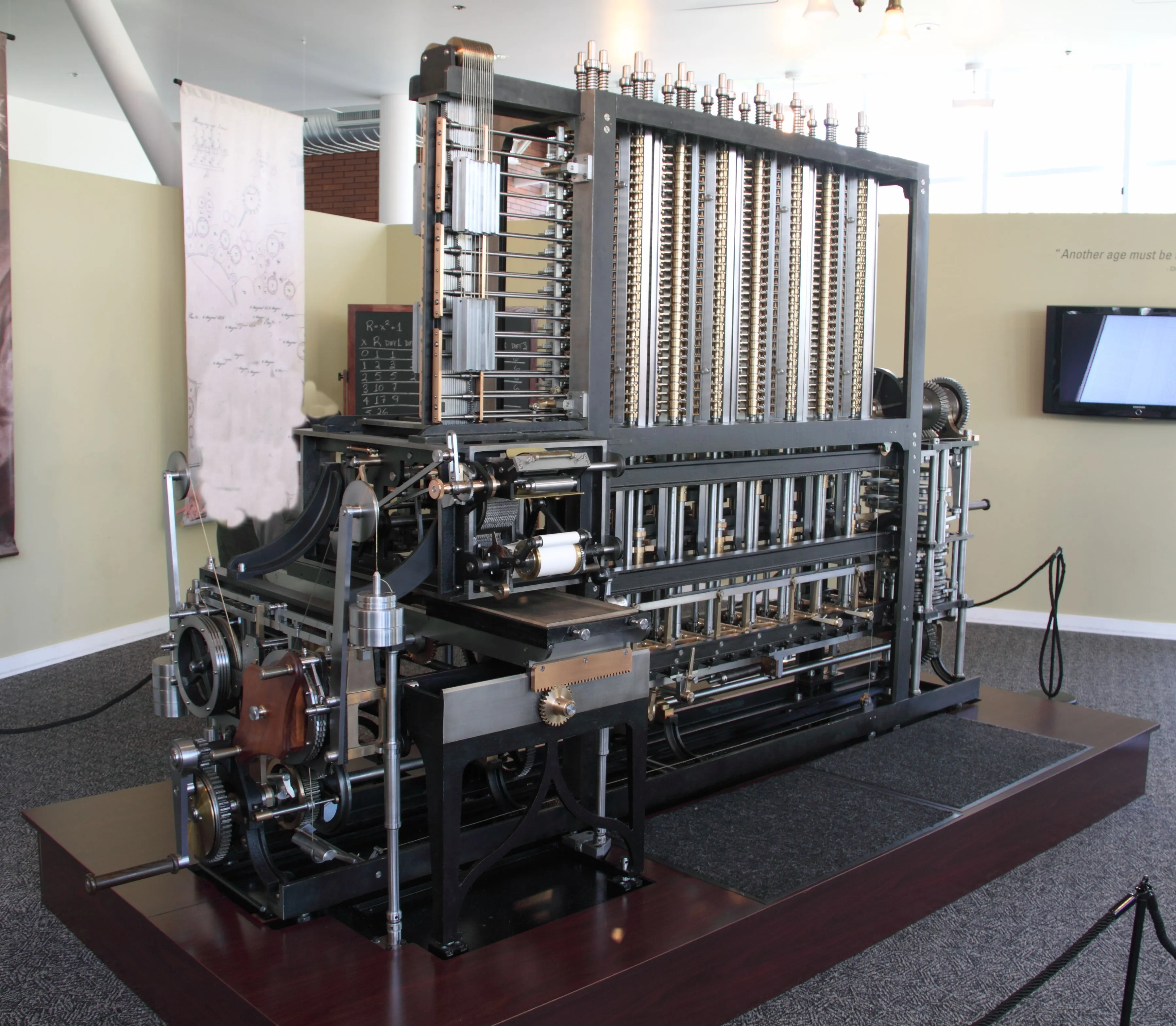 | 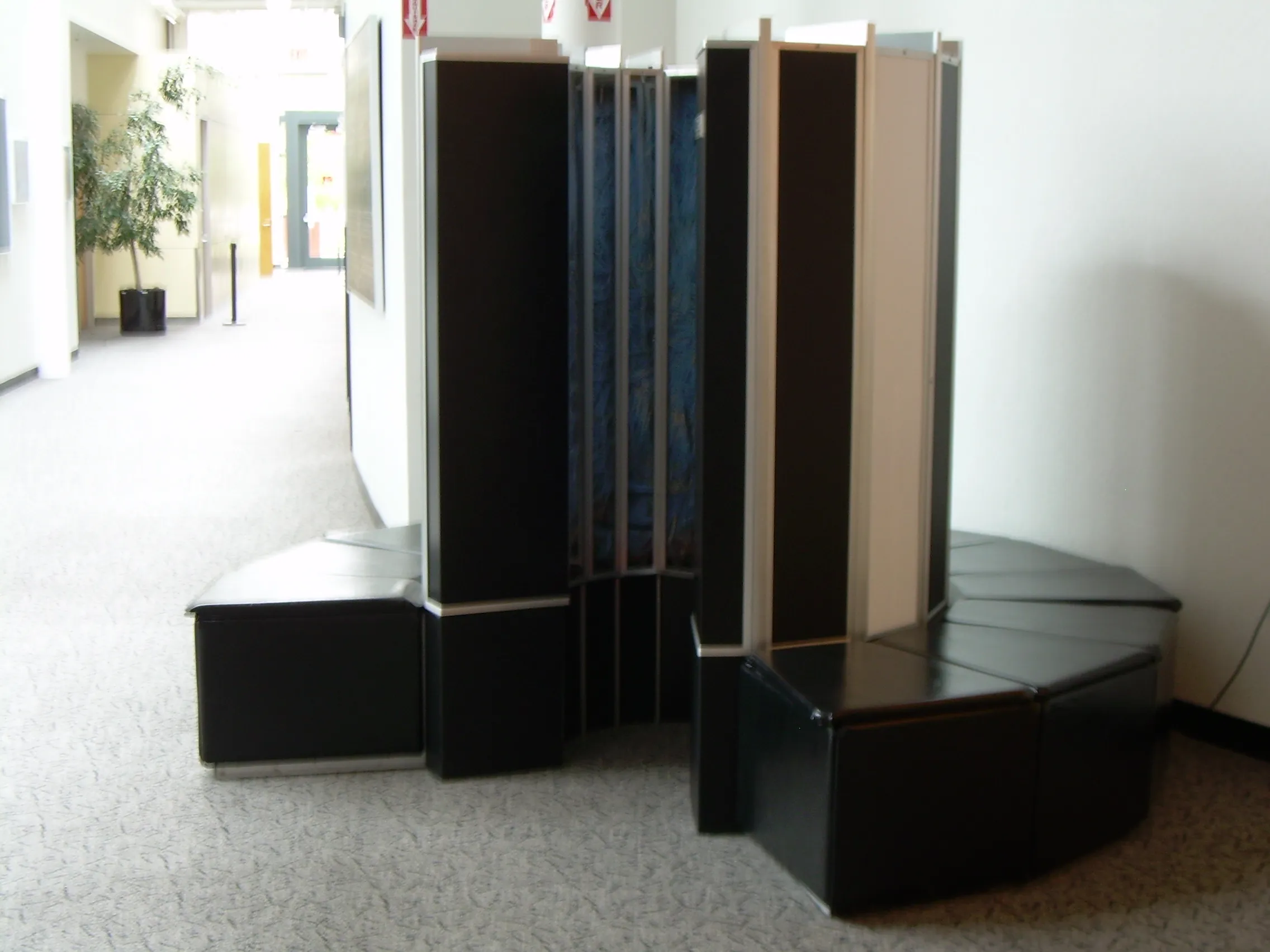 |
| A modern construction of Babbage’s Difference Engine No. 2, photographed at the Computer History Museum in 2009. A nineteenth-century vision of mechanical computation became a working machine more than a century later. Photograph: Allan J. Cronin (Canticle); source, CC BY-SA 3.0, unmodified. About the exhibit. | The Cray-1 supercomputer, introduced in 1976, photographed at the Computer History Museum in 2007. The padded seats around its cabinets give it an unforgettable shape. Photograph: Carlo Nardone; source, CC BY-SA 2.0, unmodified. |

_-_Computer_History_Museum_(2007-11-10_21.21.54_by_Carlo_Nardone).jpg)
The museum brings many eras into a single space. You can walk from one exhibit to the next and cross several decades in a few steps. But what happened between those exhibits took much longer than that walk. Someone spent the best years of a career on an idea. Someone built a beautiful product but never found enough users. Someone else started in an unremarkable corner and eventually changed an entire industry. The more I saw, the more I wanted to know what had happened between the products. How did one person’s thought become the work of a group? How did it leave a company and enter other people’s lives?
The dotcom era is one especially fascinating high point in that history. The feeling that technology made the future seem limitless spilled out of laboratories and technical circles into ordinary life and the business world’s imagination. A web page could put your words in front of someone far away. A new company could try doing business in places it had never been able to reach. Much of it was still rough, and using it was not always easy. Even so, the sense that distances were shrinking and old boundaries might give way was enough to excite people. Looking at it from their moment in time makes it easier to understand why so many wanted to take part, certain that something important was happening before their eyes.
Engineers saw new possibilities. Entrepreneurs wanted to turn them into products. Venture capitalists placed bets on the future, while managers tried to keep rapidly expanding companies running. Businesspeople looked for opportunities, governments faced new questions, and users made choices with their time and money. The same technology meant different things to these people. Some cared whether it would work; others, whether it would make money; still others, whether they were about to be left behind. These hopes and judgments came together, reinforcing and colliding with one another, and pushed the era to a dizzying height. Then came the collapse, when many plans suddenly lost the conditions that had made them possible.
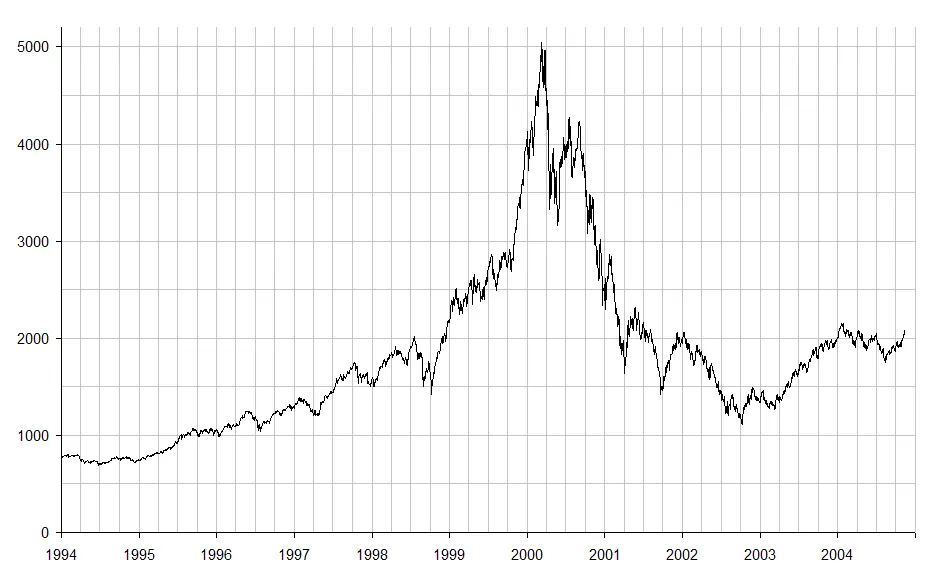
The NASDAQ Composite around the dotcom bubble: a peak in 2000, followed by a decline to its 2002 trough. Chart: Ed g2s; the credited data source is Nasdaq. Wikimedia Commons, public domain.

But the story did not stop at the bottom of the stock chart. Some companies disappeared. Some ideas were tried again. Some products and technologies kept growing until they became things we could hardly do without. How much of the convenience we eventually gained matched the future people had promised, and how much surprised them? I want to understand that part, too. The promises made during the boom deserve scrutiny, and what happened after it receded deserves just as much time. It would be a shame if a history that so many people gave so much to were reduced to a single verdict: the bubble burst.
Today, AI and agents have made that sense of possibility especially intense again. One immediate reason I want to write this series is that many friends who love AI and are building with agents have only a hazy picture of the dotcom era. This is especially true for people who know China’s internet industry well but did not experience the American internet boom firsthand. That history often comes down to a handful of labels: Netscape, the browser wars, NASDAQ, the crash. We have more personal memories of Chinese internet companies growing, competing, and changing their products, so it is easier to understand the excitement and anxiety in those stories. But look a little further back, across the Pacific, and many of the people and events shrink to little more than names.
What the people behind those labels were doing, believing, and arguing about rarely enters our conversations. That leaves us without a valuable body of experience when we discuss today’s opportunities and risks. The more I read, the more often I come across moments that feel familiar: excitement about what a new technology might change, struggles over who would control the points of access, disagreements about how far growth and spending could run ahead of revenue. Some questions that sound familiar today were asked in earnest back then. I want to know what evidence people offered, why some were persuaded while others remained skeptical, and what neither side saw coming.
In The Gilded Age, coauthored by Mark Twain and Charles Dudley Warner, there is an image I love: history does not repeat, yet the scenes before us can resemble kaleidoscopic arrangements assembled from fragments of older stories.1 Turn the kaleidoscope and the pattern changes, but some of the pieces look familiar. That is part of why I want to invite you to look back with me. How far those similarities extend, though, is something we will have to read patiently to discover. Today’s AI has its own technical conditions, costs, and ways of being used. The internet of that time belonged to people facing circumstances of their own. I may approach them with questions from the present, but first I want to hear their voices clearly.
As I write this history, I will try to keep reminding myself: we know how it ended; they did not. A company that eventually failed may still have started with a question worth asking. Someone who ultimately succeeded was not necessarily right at every step. If we can briefly place ourselves back in that moment, looking only at the products, information, and resources they actually had, many seemingly obvious choices may become less obvious. I hope this series can make room for that, giving us a chance to understand those choices before turning back to think about our own time.
So this series will begin with the birth of the World Wide Web and work its way toward 2003 and 2004. We will look at how a technology gets built, finds its first users, becomes a business, and gets caught up in capital, competition, and ordinary life. Well-known companies will appear, but people who took other paths deserve to be remembered too. After the excitement fades, what disappears, what remains, and what is still unfolding? I want to follow those questions through time. My hope is that, after reading these stories, we will have a few more questions and a little more ground for judgment when we talk about the changes around us. And perhaps you will feel what I felt when I recognized that building: history is much closer than I thought.